





Aristides Tzoneurakis* talks about the history of the Fustanella – traditional pleated skirt- and how it was worn in different regions of Greece

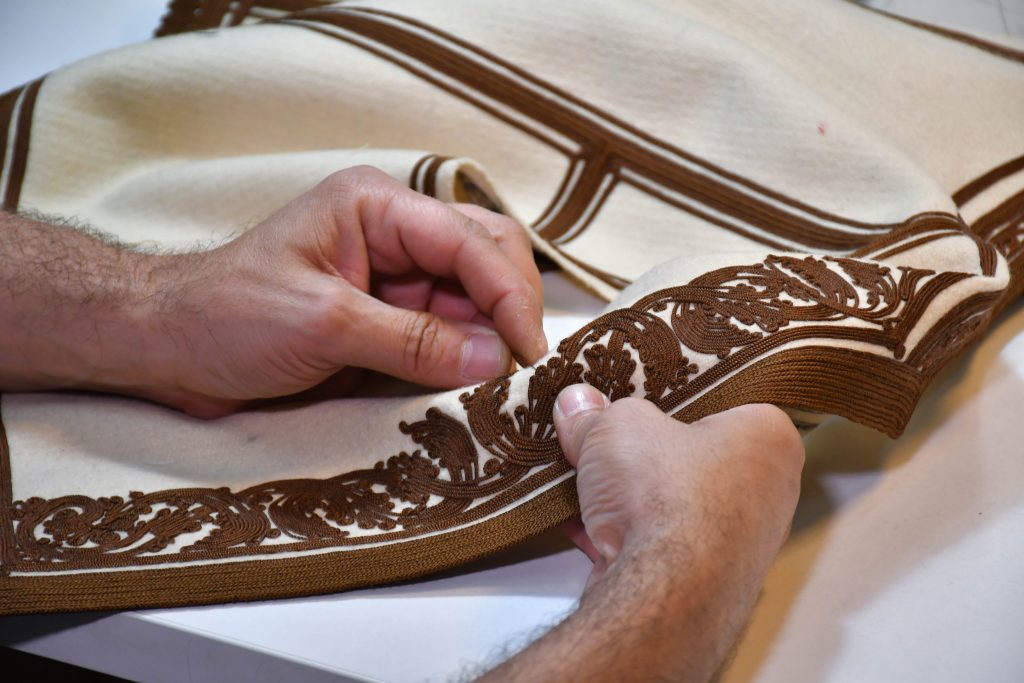
*The tailor and embroiderer from Argos, Aristides Tzoneurakis – founder of Aristotechnema Traditional Costumes – creates traditional costumes as well as modern garments and accessories inspired by Greek tradition. In 2021, he collaborated with Dior on the Cruise 2022 collection, embroidering 2 creations with his unique technique.
The foustanella and its evolution over time
“The most likely theory for the origin of the foustanella is that of archaeologist A. Keramopoulos, who argued that it comes from Roman military clothing. After all, its name is due to the type of fabric used to make it, “fustagno”, which in Italian is the cotton fabric with the diminutive “ella” meaning small skirt. In the Archaeological Museum of Epidaurus, a headless statue of a Roman official is exhibited, where it is clearly seen that he is wearing a skirt over his short tunic. This skirt is essentially a piece of cloth folded lengthwise in two, and a belt is passed through the fold that is formed, over which the fabric is draped, as the Scottish kilts were originally worn.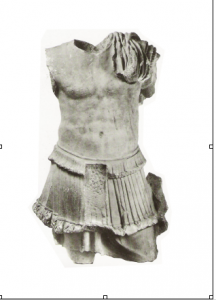 The excessive concentration of fabric at the waist led at some point to the creation of a complex garment, cut and sewn in such a way that it was narrow at the waist and wide at the hem. The current foustanella. The foustanella in Greece was initially worn by the thieves and the fighters in the Greek Revolution 1821.
The Greek foustanella in its original form was long and reached approximately to the ankle. It shortened over time, to reach its current length, approximately at the height of the hip circumference, as worn by several dancers of folklore groups.
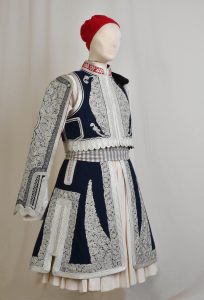
 Around the middle of the 19th century, it was established by Otto as a court garment and slowly spread as a festive costume to all the rural and pastoral populations of the country, with some variations by region. At that time, a costume with a foustanella consisted of underwear, a white cotton or silk shirt, stockings and black heels called kountoures. It also had a pair of leggings with a cap on the ankle, which we do not find in earlier times. The length of the foustanella reached the ankle, but as a court garment, the length just below the knee was established.
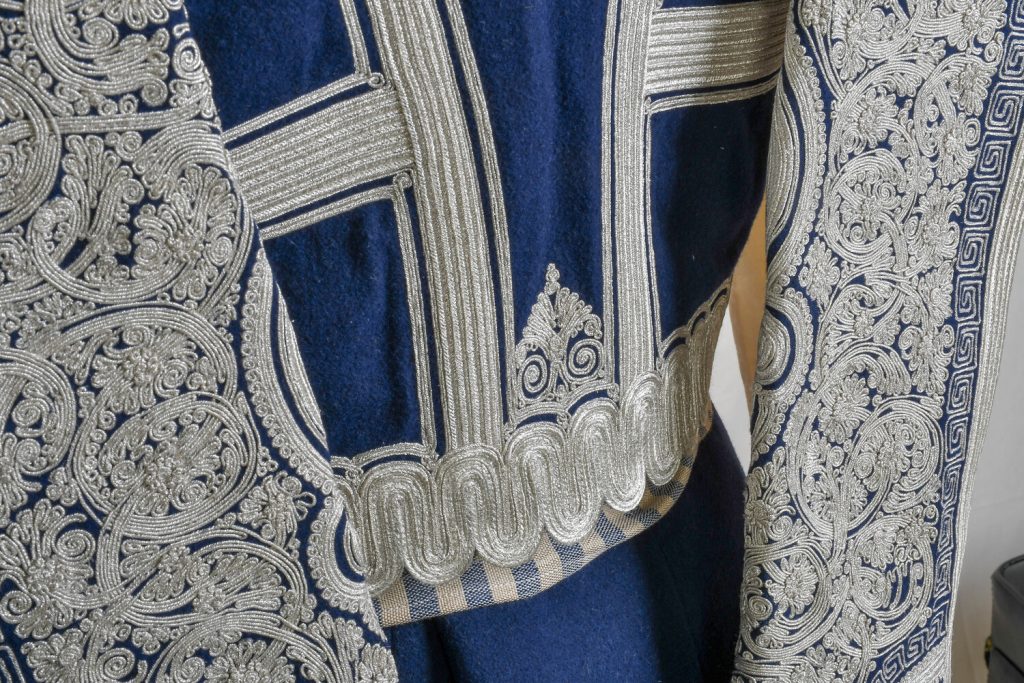
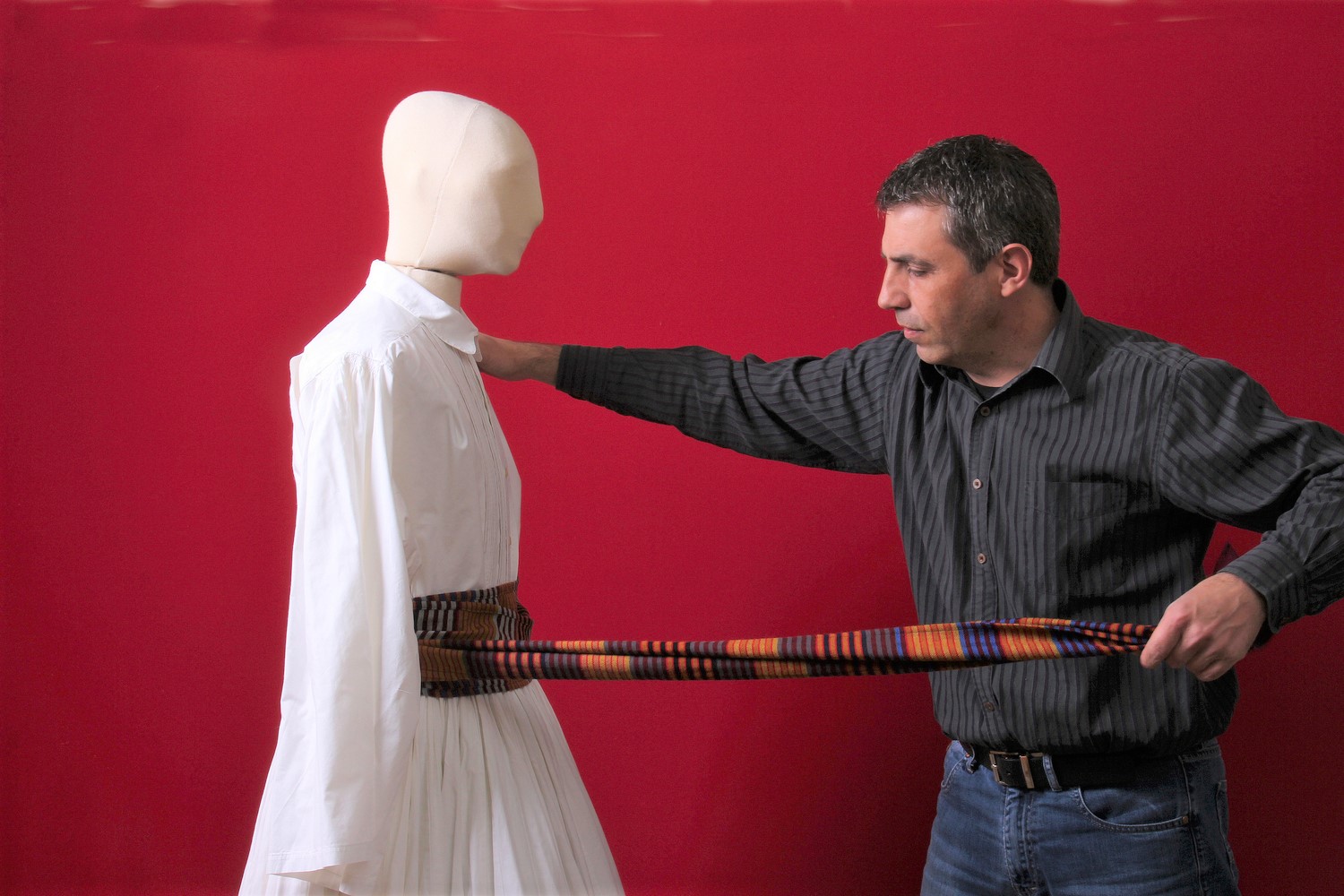
The official uniform of officers was to have three vests. First, the vest was worn, which buttoned in the center of the chest, on top was the fermeli – which was always unbuttoned and had long sleeves (which when not worn, hung down the back) and last came the fermedogeleko, which was also unbuttoned. A silk belt about 4 meters long was tied around the waist and was tied in a specific way. An important accessory of the officers’ foutanella, but also of the fighters in general, was the selachi, a belt-case where they put their weapons. As a shape, it brings to mind the ancient bow case and one wonders if it is a development of this very case. Research on this topic continues.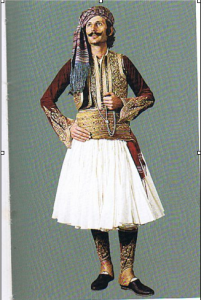 Formal dresses with a frock were often accompanied by a velvet or felt skirt, the so-called doulama, which covered the frock and was embroidered with gold or silk threads. The headgear was based on the fez combined with various saris made of silk belts tied with great imagination.
In northern Greece, a variation of the foustanella was worn only by the Vlachs and Saracatans, both men and women. In the carnivals of Macedonia, the foustanella costume always denotes the warrior (the tsaousi, the janissary).
In Peloponnese, the foustanella costume, which was established and worn as official clothing by the common people, was based on the official uniform of officers. That is, an undershirt, a cotton shirt, the long foustanella, approximately below the knee, and at the waist a black woolen knitted belt and as a head covering a black scarf, the barezi, which was worn in a specific way.
The vest was always dark blue with black embroidery except in the case of the groom’s vest which is off-white with red embroidery and is buttoned crosswise. On the feet they wore black heels or otherwise kountoures and over them the leggings called turkia which are always in the same shade as the vest. The turkia were fastened with woven garters called gonatares. Only the islanders and the areas that still belonged to the Ottoman Empire at the time maintained their local clothing and did not adopt the costume of the fustanella.
The Uniform of the Presidential Guard
The uniform of the Palace Guard, formerly and now the Presidential Guard, derives from the way the foustanella was worn in Roumeli. It is assumed that this type of costume was established thanks to the great influence that the Roumeli chieftains had in the army.
In this uniform, some symbolism has been given to the accessories to emphasize the Greek elements that characterize the foustanella, a garment whose Greekness has been guaranteed by our history. Such symbolism in the seams and accessories is, for example, the 400 pleats (piets) of the foustanella, which symbolize the 400 years of slavery, which is not true because this number is a purely manufacturing result as there are 400 pleats only in the case of the presidential foustanella, while the traditional one has 250.
Also, the red color of the tsarouhi signifies the blood shed during the revolution and its black tassel signifies mourning in honor of the fallen, which is also not true. Because the color of the tsarouhi was due to the available material at that time, which was imported from Morocco. There they specialized in leather processing and gave it a reddish-brown hue. Also, the tassel was black because it was the only color that could well hide the sharp object that served as a weapon.
The uniform consists of underwear, a short foustanella (just above the knee), a cotton shirt and 2 vests. The inner vest which buttoned in the center of the chest and the férmeli which remained open and had long sleeves, which were either worn or thrown over the back. Their color is off-white with embroidery of white and black tehrilia. In the case of the Presidential Guard, the two vests have been adapted into one. At the waist they wear a two-color belt, usually blue and white, and for headgear they use the fez, while in the past the kalpaki (a type of black fur hat) was worn. Finally, on their feet they wear tsarouchia and at knee height the woven garters or knee-highs.
Article by Aristides Tzoneurakis. The information was taken from the book by Ioanna Papantoniou entitled “Greek Costume from Antiquity to the Early 20th Century”.
Below creations by A. Tzoneurakis.
Credit Photo Sarantos Kahrimanis