






Digital innovation is transforming cultural heritage, from documentation to creation with algorithms, opening new avenues of participation, interpretation and experiential experience
The meeting of culture with digital innovation is no longer just a matter of imagination or experimentation in art. It is a fundamental paradigm shift that changes the way we perceive, narrate and experience cultural heritage. From traditional documentation to interactive experience and creation with the help of algorithms, cultural expression is entering a new era of reinterpretation, participation and active reception. The relationship between culture and technology has deep roots: from the invention of writing in Mesopotamia and the recording of memory on material evidence, to typography and the industrialization of knowledge, each technological leap has been accompanied by new ways of preserving and disseminating culture. Today, the digital dimension is not limited to simple recording or archiving, it is a field of reinterpretation, experimentation and active participation.
The digitization of cultural evidence was the first step in this transition. Digital archives, 3D visualizations, virtual tours and thematic databases have expanded access to knowledge, freeing content from geographical and institutional boundaries. Platforms such as Europeana and Google Arts & Culture, as well as initiatives by national cultural organizations, are transforming cultural heritage into a public digital asset, opening new avenues for participation and sharing. Attention is then shifting to transforming knowledge from static to experiential. Through Augmented and Virtual Reality (AR/VR) technologies, interactive environments and gamification tools, the visitor ceases to be a passive receiver and becomes an active interlocutor of the cultural narrative. Museums and archaeological sites are transformed into multimodal environments, where knowledge is not “exhibited”, but “experienced” and recreated according to the interests and profile of the viewer.
The most daring stage of digital transformation is the integration of algorithmic systems and Artificial Intelligence into the creative process. Generative design tools, image, sound and text synthesis algorithms, as well as natural language models, now function not only as means of representation, but also as co-creators of new forms that draw from cultural memory. Technology is not limited to the representation of the past, but it reconstructs it, offering new possibilities of understanding and aesthetic experience. Authenticity ceases to be an exclusively material characteristic and becomes an experiential property – a truth that emerges from the viewer’s encounter with the work, making him a participant in the creation of meaning.
The importance of this digital change is underlined by Lev Manovich (The Science of Culture: Social Computing, Digital Humanities and Cultural Analytics, 2015), who introduces the concept of Cultural Analytics. According to Manovich, the digital transition is not limited to simple documentation or archiving, it is a radical transformation of the ways in which we understand and study culture. Through computational tools and analysis of huge cultural data sets, patterns and relationships are revealed that could not be identified in limited samples. The method is not limited to the “typical” or the “popular”, but illuminates the total diversity of cultural creation, combining a humanistic focus on interpretation with the systematic analysis of big data. In other words, the digital transition enables us to see culture with new eyes, highlighting aspects that previously went unnoticed. At the same time, the digital transition brings challenges: digital exclusion, unequal access and the commercialization of cultural content can limit the variety of narratives. The need for an ethical approach, critical digital literacy and respect for local communities is more urgent than ever. Despite the difficulties, the trend towards open access, participatory creation and empowerment of communities positively predisposes for an optimistic future of digital cultural heritage.
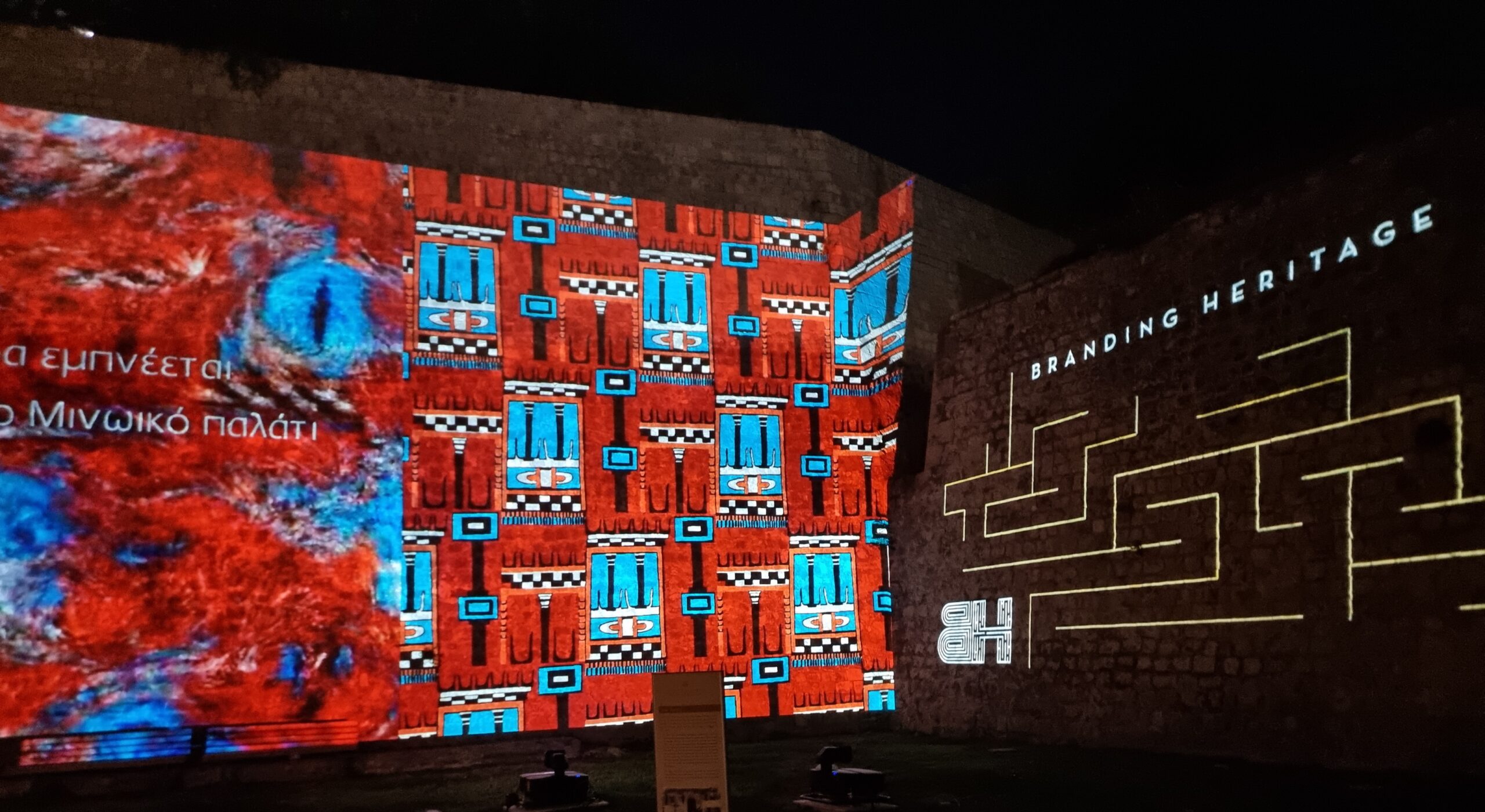
An illustrative example of this meeting of culture and technological creation is the project Digital Minoans, presented at the 2nd Festival of the Walls of the Municipality of Heraklion on September 7, 2025, on the occasion of the inclusion of the Minoan Palaces in the UNESCO World Heritage List. Through the collaboration of Branding Heritage with Comdes Design Studio and under the auspices of the Ministry of Culture, the Venetian Walls were transformed into an impressive digital canvas, where the tradition of Crete met modern aesthetics and technological innovation.
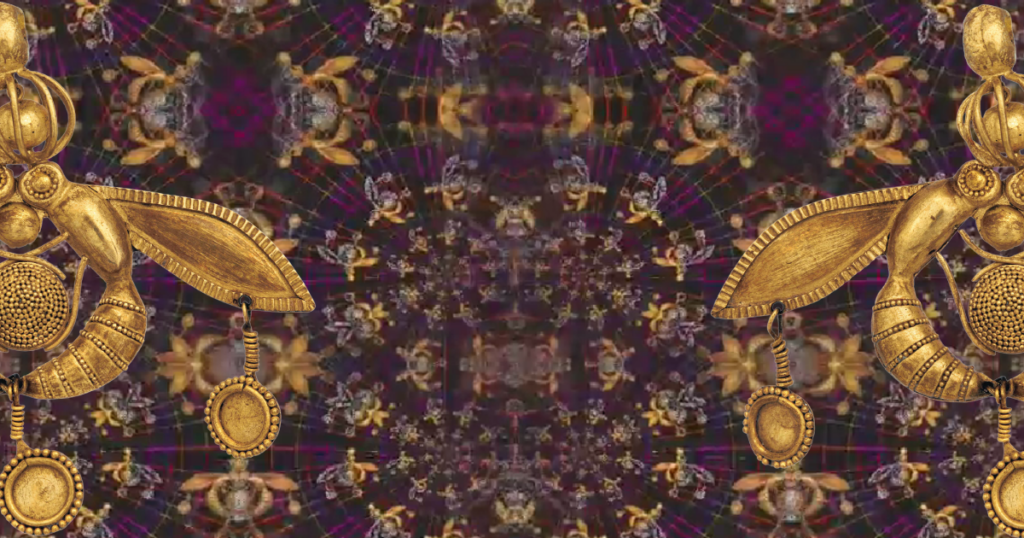
Through generative art technology, visual impressions inspired by the Minoan culture, the murals, myths and archaeological symbols of Crete were created, connecting historical memory with modern creation. The project involved contemporary artists such as Loukia Orfanou, Polina Ellis, The Artians, as well as students from the Athens School of Fine Arts, whose works were included in the “Contemporary Minoans” collection of Branding Heritage.
The creator of the institution, Ms. Katerina Frentzou, notes: “Digital innovation offers new tools and forms of storytelling that allow culture to be reinterpreted and travel through time through interactive environments. When the past becomes a source of inspiration, even a cold algorithm can acquire a “soul” and convey stories and emotions. The balance between technological imagination and cultural responsibility lies in the creator’s ability to translate the past into new media, without alienating the content from the values that shaped it. This is a balance that does not depend on the machine, but on the perspective of the person who operates it – the creator must have in-depth knowledge of the cultural context, history, symbols and traditions from which he draws inspiration. When innovation arises from respect for memory, then culture does not lose its soul; it simply changes language. Cultural memory is not lost when it is reformulated, but when it ceases to inspire.”
The visual and technical rendering of the project by the Comdes Design team highlighted the harmonious coexistence of art, science and algorithmic form. As Dr.Stefanos Drakos, head of the studio explains: “Digital Minoans is not a static representation, but a dynamic field of flow, a ‘living matter’ that arises from algorithmic particle patterns based on fluid mechanics and stochastic randomness. This architecture of chaos and order functions as a bridge between the scientific and the cultural: the algorithms do not try to ‘imitate’ the past, but to recreate its memory through movement, light and change. The balance between mathematical precision and cultural depth is achieved precisely through this relationship of mutual respect, where the system sets the limits of physics, but the human determines the meaning of the narrative. As for Artificial Intelligence, clarifying that this particular project was not based on it, it does not carry consciousness, but it does carry the ability to reconstruct the intangible imprint of a culture through the logic of form and movement. Therefore, taking into account the above, respect and honesty towards memory are not properties of the code, but of the gaze that guides it. The machine can give birth to unexpected beauty; however, it is man who gives it orientation, ethics and responsibility towards cultural heritage”.
Digital Minoans proves that culture does not need to fight technology, it can use it creatively, transforming it into a tool of memory, imagination and expression. Through such initiatives, digital innovation acquires cultural meaning, while culture discovers new ways to narrate and bring its history to life. Digital cultural heritage does not replace the past, it renews it, illuminating with modern means the values and experiences that gave birth to it, and making the viewer an active participant in a continuous process of reinterpretation.
